Podcast Corner
How the podcast got its name
The medium was older than its name, the name was a joke that stuck, and both facts tell you everything about how community audio actually spreads.
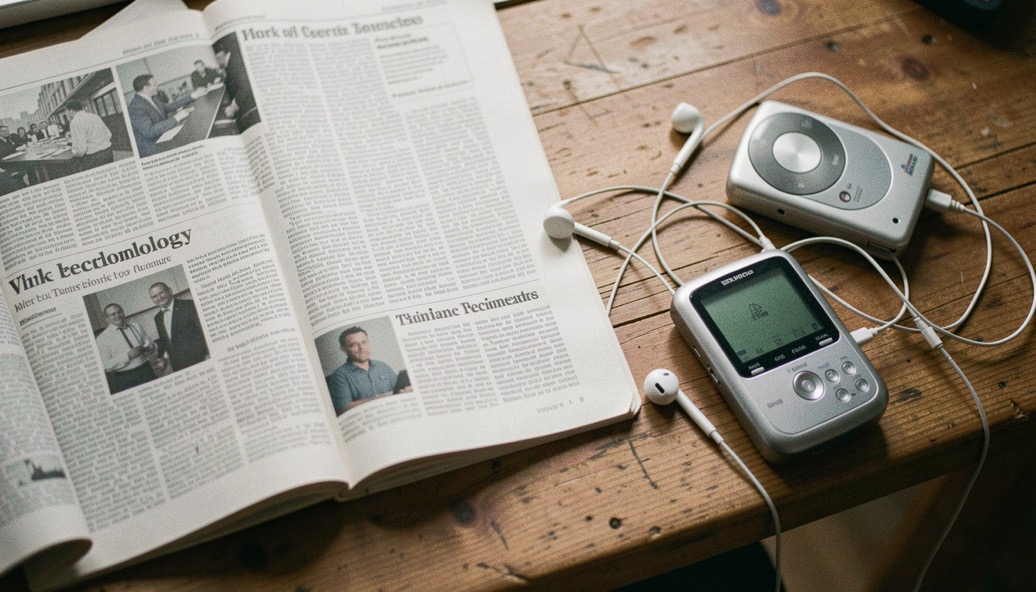
The word arrived before most people understood the thing it named. In February 2004, the journalist Ben Hammersley, writing a technology column in The Guardian about the boom in amateur internet audio, needed a name for the practice of subscribing to spoken-word RSS feeds and listening on the go. He offered a shortlist, half in jest: “audioblogging”, “pod-casting”, or, for the bandwidth-conscious, “Gu-rrilla radio”. The middle word, borrowed from Apple’s iPod plus “broadcast”, escaped the column and attached itself permanently to the medium. By December 2005 the New Oxford American Dictionary declared “podcast” its word of the year, less than two years after the column. Few technologies have been named so casually and canonized so quickly.
The plumbing under the name
The technology predates the word by years, and it matters because community radio stations already understand every part of it. In the early 2000s, the RSS feed format that blogs used for headlines grew the “enclosure”, a tag that lets a feed carry a file: post an MP3 link in your feed, and any subscriber’s software can fetch it automatically. Software writers, most prominently Dave Winer on the feed side and Adam Curry on the client side with early iPodder-style applications, closed the loop around 2004: subscribe once, and every new episode lands on the portable player overnight. Apple folded podcast support into iTunes in June 2005, the audience stepped up from thousands to millions, and the file-sharing habit became a media industry. The deepest fact of the design is also its most radical: publishing a podcast requires no platform’s permission, only a feed, because the distribution system is the open web’s own.
The names that did not win
The losing candidates deserve a hearing, because they describe the medium honestly. “Audioblogging” was accurate and unlovable: the feeds really were blogs with file attachments, and the nickname would have aged as badly as the web jargon around it. “Guerrilla radio”, offered in the same column, captured the unauthorized spirit the micropower movement would have recognized but promised an edge the mainstream audience never wanted. Even “podcast” was contested for a moment: writers proposed “netcast” and “webcast” as the future-proof terms, and a few public broadcasters avoided the trademark-adjacent word for years. The market chose the wrong word and made it right, which is a reminder that naming, like broadcasting itself, is settled by listeners rather than by committees.
Why community radio claimed it early
Community broadcasters recognized podcasting instantly, because it solved their oldest problem with their oldest tool. A station has always been a maker of recordings with a distribution bottleneck: the signal ends at the edge of its few miles, and tape duplication was never a strategy. RSS enclosures turned every archived hour into a subscribable series with no new infrastructure, and the volunteer culture of community radio, comfortable with training neighbors to run a mixer, translated directly into training them to publish feeds. The station podcast workshop on this site is built on that translation. Meanwhile the aesthetic that podcast audiences came to love, unpolished voices, niche subjects, hosts who assume the listener is curious rather than passive, had been refined on the dial for decades, from the freeform campus shows to the listener-sponsored experiment whose pledge model podcast patronage quietly reinvented.
The name itself, ironically, may fade: devices stopped being iPods long ago, and “podcast” survives as a habit of speech rather than a description of hardware. What survives underneath is the plumbing and the proposition that a small group with a microphone and a feed can hold an audience without asking anyone’s leave, which is, not coincidentally, the founding proposition of the stations this magazine covers. Community radio named the medium twice: once by example, once by accident, and both times without asking a committee for permission first. The word was a joke that stuck; the idea underneath it was the serious one.