Radio History
Pacifica and listener-sponsored radio
Before LPFM, before public radio, a small group of pacifists in Berkeley invented the business model community broadcasting still runs on: the listeners pay, so the listeners decide.
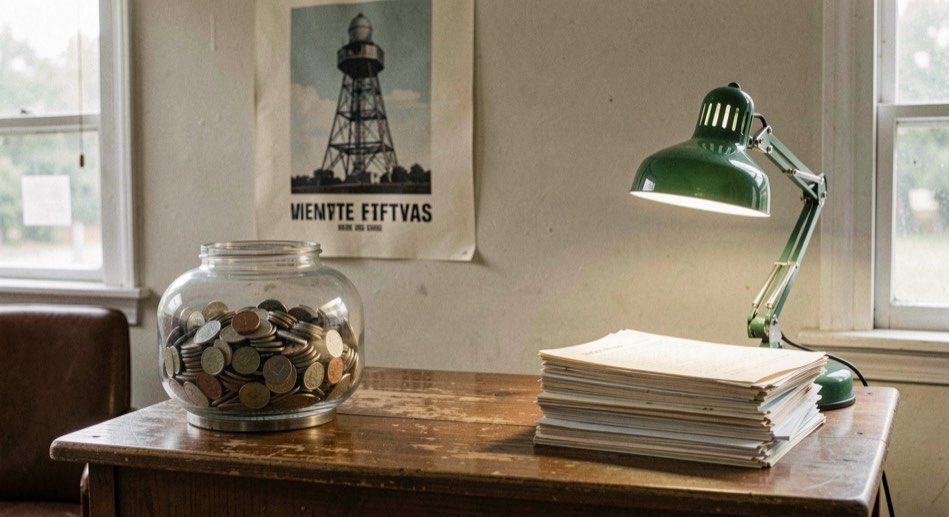
The proposition was absurd on its face: a radio station with no advertisers, funded entirely by the people who listened to it, programming whatever the audience and volunteers judged worth broadcasting. Lewis Hill, a pacifist who had been dismissed from a network news job for his convictions, spent the 1940s arguing that radio could serve listeners rather than sell them, and that the money model was the only thing standing in the way. On April 15, 1949, KPFA in Berkeley, California, put the theory on the air under the Pacifica Foundation he had helped found, and became the first listener-sponsored radio station in the United States. The pledge drive, the member card and the on-air reading of listener letters all trace to that Berkeley studio.
What the experiment proved
KPFA demonstrated, in an era when the dial was either commercial networks or a scattering of educational stations, that an audience would voluntarily fund serious, uncategorized programming: long-form music with informed commentary, public affairs debates that commercial sponsors avoided, poetry, foreign affairs in multiple languages and political speech from across a spectrum no licensee would have risked. The foundation carried the model to New York with WBAI in 1960, to Los Angeles with KPFK, to Houston with KPFT in 1970, whose transmitter was bombed twice in its first years by opponents of its programming, and to Washington with WPFW in 1977. The five-station Pacifica network became the archive of American dissent: its tape library preserved decades of speeches, hearings and cultural programs that commercial radio never recorded.
The archive and the surveillance file
Two artifacts of the Pacifica story reward attention. The first is the tape library: decades of broadcasts preserved when commercial stations wiped their libraries, including movement speeches, courtroom audio and cultural programs that exist nowhere else, an argument for archiving that the podcast workshop inherits directly. The second is the FBI file: Pacifica stations and their staffs were monitored and harassed through the McCarthy era and after, the subject of freedom-of-information releases that read today as a study in what independent broadcasting costs. Both artifacts teach the same lesson this magazine keeps repeating: a station that belongs to its listeners produces a record, and the record becomes history.
The inheritance, good and complicated
Pacifica’s governance was as experimental as its funding, and the foundation’s internal battles over boards and bylaws in the 1990s are a standing seminar in nonprofit governance for every community station since. But the inheritance that matters to this magazine is structural. Listener sponsorship proved that a station’s only necessary constituency is its audience; the public radio system of the 1970s, the thousands of volunteer-powered noncommercial stations, and every LPFM pledge drive since operate on that proof. The underwriting acknowledgments allowed on noncommercial stations today, described plainly in the rules desk, still stop short of advertising for the same reason Hill insisted on it: a station paid by its listeners answers to its listeners. Every pledge drive that treats the audience as members rather than traffic is running the Berkeley playbook, and the stations that drift toward sponsor-flattering formats drift away from the only constituency that ever mattered.
Governance as a second experiment
Pacifica also tested, painfully and publicly, the idea that listener ownership needs structure. Internal disputes over boards and bylaws culminated in a governance crisis through the late 1990s, listener lawsuits, and a settlement that rebuilt the foundation around elected local station boards and a restructured national board. The episode is studied in nonprofit law classes now, and its practical lesson sits on every community station’s shelf beside the transmitter manual: mission and money are not enough, because the constitution of the organization is part of the broadcast. Founding groups drafting bylaws today are doing Pacifica’s homework for them, and the startup roadmap treats the bylaws as buildout equipment for exactly this reason. The lineage still runs: the technical history gave community radio its band, the pirate movement won its licenses, and Pacifica gave it the economics that keep both on the air.