Podcast Corner
Turning a station into a podcast workshop
A station that treats every broadcast as a recording gains a second audience that never touches the dial, and the studio it already owns is most of the way there.
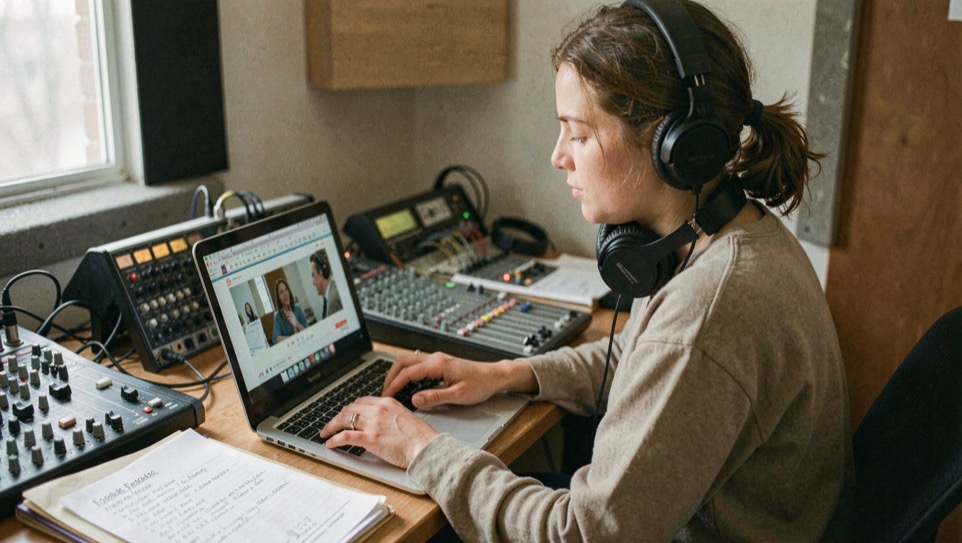
The argument for podcasting a community station is arithmetic. A live broadcast reaches whoever is within the signal’s few miles at 7 o’clock on Tuesday; the same hour, archived and fed, reaches everyone the station’s community includes, forever, on their own schedule. Edison Research’s long-running Infinite Dial surveys have placed monthly podcast listening near half of Americans over twelve in recent years, an audience several times larger than any single station’s contour. The station does not need to chase that audience with production budgets; it needs to stop throwing away what it already produces, and to add a thin workshop layer on top.
Start with the shows that survive recording
Not every broadcast hour wants a second life, and the workshop begins with triage. Interview shows, public affairs discussions, sports commentary, history and storytelling hours and anything scripted translate cleanly; the call-in hour with names and phone numbers on air needs consent habits and a delay button check before it becomes an archive; music-heavy shows meet licensing realities that spoken word does not, so stations typically podcast their talk and keep their music on the dial. The rule of thumb: podcast the hours a stranger would understand without living on your street, because that is exactly who the feed hands them to. This is the recorded complement to the on-air habits in our 100-watt sound guide.
The feed is the station of record
The plumbing deserves more care than the audio, because episodes are replaceable and feeds are not. Every show needs a stable RSS feed, a permanent home for the audio files and cover art that stays legible at thumbnail size, and the naming discipline of a library rather than a desk drawer: consistent episode titles, dates and numbering, so that a listener who subscribes in year one still finds year four orderly. Free and low-cost hosting services handle the storage and feed generation for thousands of community stations; the critical habit is owning the domain and the subscriber relationship, exactly as the naming history counsels: the open feed is the whole point of the medium, and a station that builds its audience inside a locked platform has rented back the technology it already mastered.
Cut-downs, mini-series and honest numbers
The workshop matures when a station stops treating the feed as a dump of whole broadcasts. A two-hour live magazine rarely wants to be a two-hour episode; the discipline of a produced cut-down, fifteen to thirty minutes with the best conversation intact, routinely finds more listeners than the original aircheck. Some stations graduate to dedicated mini-series, reported pieces and interview segments that never touch the live schedule at all, produced entirely on the workshop bench. Measure success the community way rather than the platform way: download totals flatter and mislead, while the letters, call-ins and door conversations that follow a well-made episode are the currency a membership-funded station actually banks, as the listener-sponsored tradition understood long before feeds existed.
Volunteers, workflow and the long bench
The workshop’s real product is people. Editing sessions are the gentlest training a station owns: a nervous volunteer who would freeze at a live microphone will happily cut ten minutes of breath from an interview, and three months of that builds an operator. Give every show a two-person bench of producer and editor, hold a monthly open editing night, and publish the workflow on one page: record at the board as usual, export a spoken-word loudness that sounds right next to commercial feeds, write honest show notes, upload, schedule. The station that follows the page acquires a production bench it can draft into live operations during emergencies, a redundancy the storm playbook counts on, and it acquires the habit of archiving its community’s voice that the Pacifica tape library proved to be history’s raw material. One signal, one studio, two audiences: the workshop pays for itself in the first rescued hour.