LPFM Rules Made Simple
The FCC point system made simple
The point system is the FCC’s answer to a simple question: when several communities’ groups chase one frequency, which of them is most the community’s own?
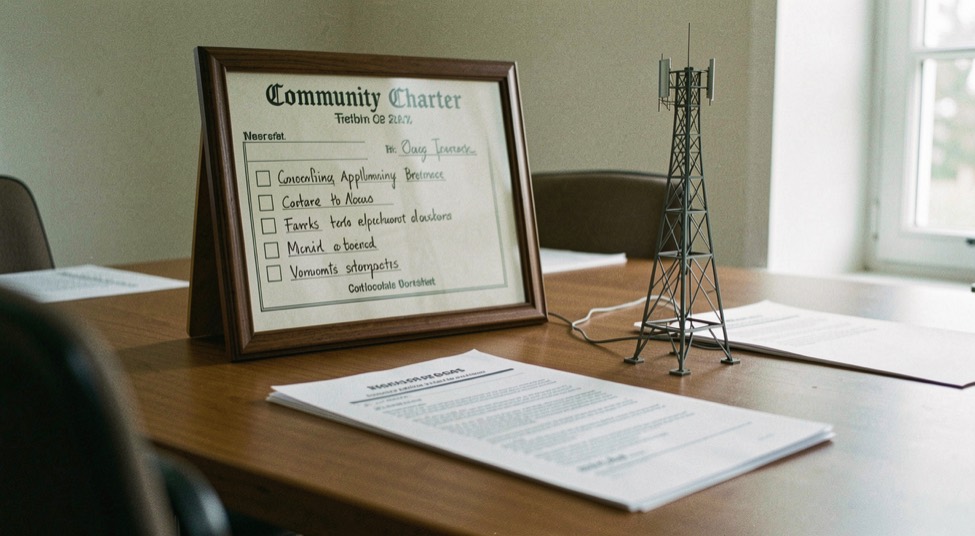
Most of the time, an LPFM application faces no rivals: the group found a clear channel, filed in a window and received its permit. The point system exists for the other case. When two or more applicants want the same channel, the FCC does not auction it and does not reward speed. It scores the applications against public-interest criteria, and the higher score wins the construction permit. Understanding those criteria before a window opens is the difference between a group that spends the filing month confident and a group that discovers, too late, that a rival’s paperwork told a better community story.
The points, in plain sentences
The criteria reward rootedness. An applicant earns credit for proposing to originate a substantial number of hours of programming locally, for keeping a main studio inside the community of license, for promising a full twelve-hour broadcast day and for commitments to live programming rather than automated feeds. A long track record counts extra: an organization that has existed and served the community for years, with a governing board drawn from local residents, scores as an established community entity, the single most valuable claim in the system. Every claimed point must be documented, because rivals may challenge the application, and the FCC reads the file, not the intentions. The current framework is the product of revision, notably the 2010s reforms that followed the Local Community Radio Act, so treat the published criteria of each window as the binding list rather than memory of older scorecards, and file the strongest honest case under the rules in force at the time.
Challenges, and the paperwork that survives them
Points claimed in a filing are points a rival may attack, and the system expects that. A challenger reads the application the way an auditor reads a ledger: does the board really live in the community, did the organization exist when it says, are the promised hours actually programmable with the volunteers named? Groups lose point races over documentation far more often than over substance, so the habit that matters is the boring one: minutes that match the claims, membership lists dated and signed, letters from community partners kept on file. Write the application so a skeptical neighbor could verify every sentence from the papers in the binder, and the race is already half won.
Settlements: the civic alternative to a shootout
Points are not the whole story, because the FCC prefers communities served to applicants rewarded. After a window closes, mutually exclusive groups enter a settlement period during which all but one may withdraw, often in exchange for concrete benefits: guaranteed weekly airtime on the winning station, seats on its community advisory board, joint production of programs or shared use of studio facilities. Many of the friendships visible on American community dials today, where two groups who once contested a channel now share a frequency’s worth of programming, began as engineered settlements of a point race. Groups should enter a window knowing both currencies: the points that win a channel and the settlement terms that can make sharing worthwhile.
Building the score honestly, years in advance
Every point-earning fact is a thing a good organization does anyway: existence over time, local governance, real service, a studio address in the neighborhood, a schedule it can genuinely staff. The strategic advice reduces to one sentence, and the startup roadmap repeats it: become the applicant the criteria describe before the window opens, then document it. Volunteer directories such as the ones listed in our dial search guide reveal early whether your county even contains a contested channel; if it does, read the rival’s public record the way a friendly rival reads yours. And if the race is lost, the loss is not the end: withdrawn groups keep their organization, their channel knowledge and their claim to the next window, and history from the 2013 window onward shows second-time applicants winning permits the moment a new opening or a settled channel appears.