Start a Station
FCC application windows, explained
The strangest feature of the LPFM world is its calendar: you cannot apply when you are ready, only when the FCC opens a window, and the winners are almost always the groups that prepared during the closed years.
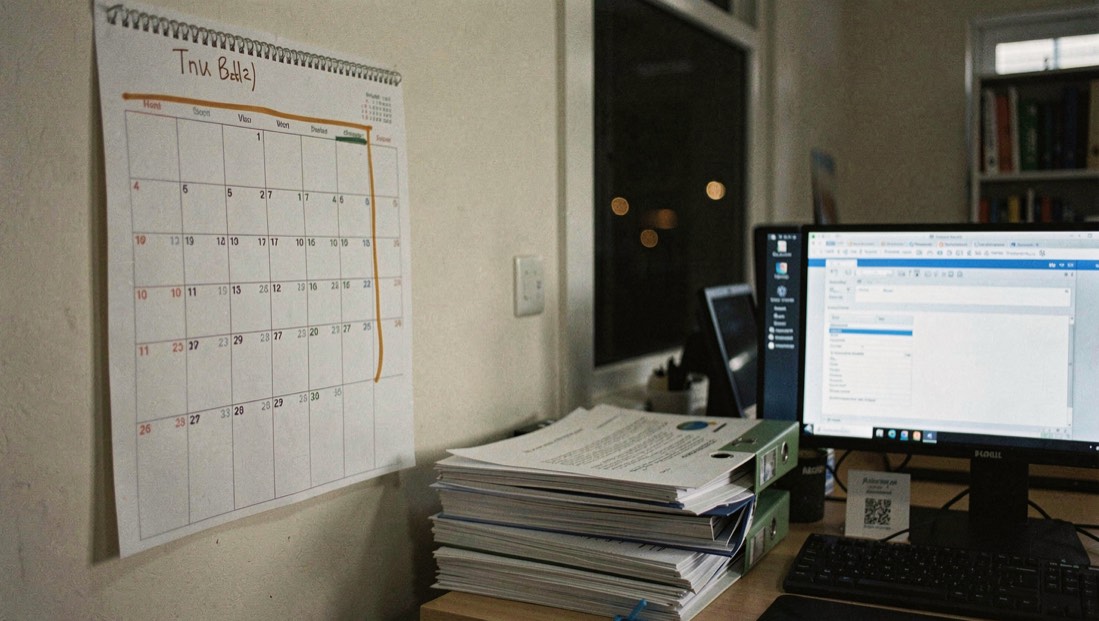
Most licenses in American life can be applied for on any business day. A low-power FM license cannot. The Federal Communications Commission accepts new LPFM applications only inside a filing window, a bounded period announced in advance, sometimes lasting days and sometimes weeks, after which the gate closes again, often for years. The rule exists because the spectrum in any town is finite: if applications were open continuously, the fastest filers would drain every viable channel and latecomers would inherit only scraps. The window turns the dial into an exam offered on scheduled dates, and everyone who studies the point system sits it together.
The calendar so far
The LPFM service was created in January 2000, and its first great demand arrived with the window of October 15 to November 14, 2013, the first opportunity in more than a decade for most of the country. More than 2,800 applications went in, an avalanche produced by a decade of organizing by groups such as the Prometheus Radio Project, and the FCC spent the following years granting construction permits from that single month of filings. The service learned its lesson about cadence: after 2013, the Commission moved toward regular, shorter windows, including a November 2023 filing round, so that groups today can plan on openings measured in years, not decades. Treat those dates as history with a future: the next window will be announced in the Federal Register and the FCC’s media releases, and a group that is not watching will simply miss it.
What actually happens inside a window
Filing is electronic. The application, FCC Form 318, names the applicant, its governing body, its community of license, the proposed channel and technical facilities and the points the group claims, all of which the point system guide unpacks. If two groups want the same channel, the filing becomes mutually exclusive, and the FCC compares points, then offers settlement periods in which one group can withdraw in exchange for an agreement such as program time on the winner’s station.Groups that filed in 2013 describe the month as paperwork under adrenaline: engineering exhibits finalized, board lists typed and retyped, certifications gathered. None of that work is window work; all of it can be done years early, as the LPFM roadmap insists.
After the window closes
Filing is not the finish line. The Bureau processes the cohort, sorts mutually exclusive groups into point comparisons, and publishes decisions over the following months and, for the 2013 pile, years. Rivals gain a period in which they may petition against an application, on the record, using the documentation rules; a clean, honest file survives that scrutiny far better than an optimistic one. Granted groups receive a construction permit and a buildout clock, at which point the advice in the roadmap takes over. Groups that lose a race keep everything that made them competitive: the organization, the channel study, the tower option and the habit of filing on time. In every window since the service began, second-round applicants from the previous cohort have won permits, which is the calendar’s quiet promise: windows reward preparation twice.
Preparing during the closed years
The window calendar rewards a specific kind of patience. Between windows, a group can incorporate and age its community credentials, run a channel study for the county, negotiate an option on a tower site or a water tank, budget the buildout with our studio guide and train its volunteers on podcast production through the workshop guide, so the station has an audience habit before it has a transmitter. When the window opens, the prepared group files in week one and spends the rest of the month helping its neighbors, which is how the community radio movement has always scaled: each window raises a cohort of stations, and the stations of the previous cohort steward the newcomers through the point race. A filing window, in the end, is not a lottery ticket. It is a gate that opens for the groups that spent the quiet years becoming the applicant the FCC’s criteria already described.