Start a Station
Building a studio on a community budget
The transmitter is one purchase among many, and rarely the trickiest: a workable low-power station is built from patient shopping, donated rooms and a budget that respects the license clock.
Ask five low-power builders what a station costs and you will hear five numbers, because terrain, towers and thrift all move the total. The honest band for a first buildout, gathered from volunteer projects over the service’s first decades, runs from roughly ten thousand to thirty thousand dollars, and the spread is explained less by equipment quality than by the two line items below it: getting a signal to the antenna, and getting the antenna into the air. This guide walks the budget in the order the money leaves.
The signal chain: the costs you cannot haggle with
The transmitter itself is moderate: a new certified 100-watt FM exciter-transmitter sits in the low thousands, and a certified unit is not optional, because the FCC enforces its technical rules against uncertified gear. From there the money follows geography. If a water tank, a barn silo or a friendly institution’s rooftop stands near the community’s center, the antenna and coax may cost a couple of thousand dollars; if the group must build or lease a tower, add five figures and an aviation lighting bill. Between studio and transmitter runs the studio transmitter link, a small licensed microwave link or a fixed internet circuit, and every one of these parts must match the facilities named on the construction permit from the startup roadmap. Volunteer groups learn quickly why the channel protections matter economically: a clean channel is a cheaper channel, because interference mitigation is the hidden tax of a bad dial position.
The studio: where thrift works
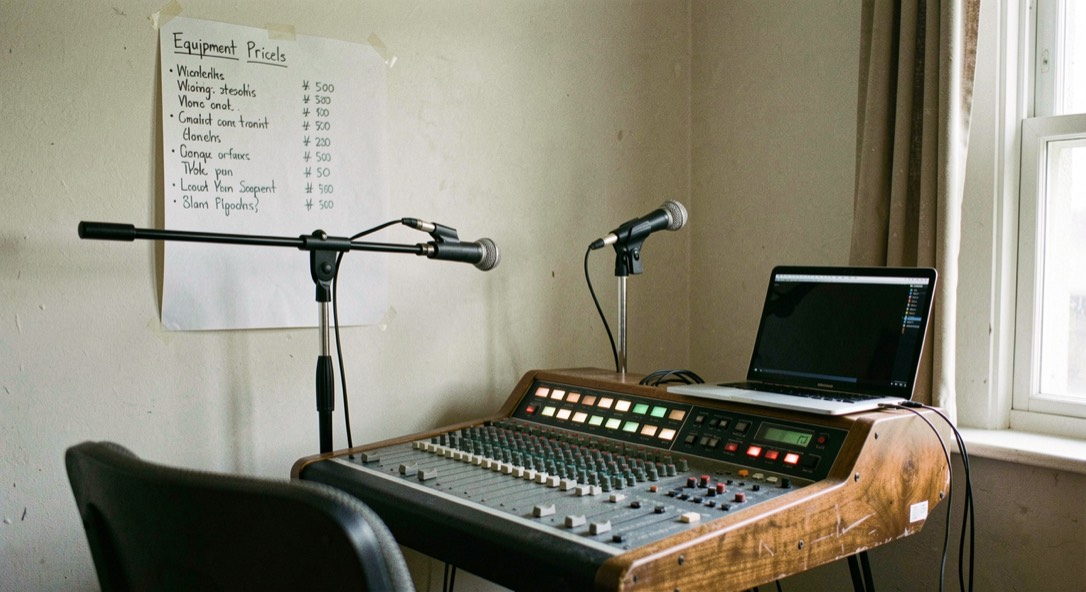
The studio half of the budget is where community radio has always been brilliant, because broadcast-grade audio no longer requires broadcast-grade prices. A modest mixing desk, two or three dynamic microphones with boom arms, closed headphones, a computer running free recording and playout software and a quiet carpeted room make a fully respectable station: thousands of hours of American community radio have been produced on exactly that inventory, bought used, donated by retiring DJs or crowd-funded in small checks. Spend on the boring parts instead: electrical work, a UPS battery unit, insurance on the room and a lockable door. The sound of a 100-watt station comes from programming and speech, not from gold-plated consoles, and listeners cannot hear the brand of the desk through a 3.5-mile signal.
The line items volunteers forget
Every veterans’ budget contains the same afterthoughts. Set aside money for signage and the public inspection file, for internet service and a streaming encoder so the station exists beyond its radius, for the first year of electricity and rent, for printed program schedules and for training days, because a studio nobody has been taught to use is a prop. Budget a contingency of a fifth of the whole, and protect the schedule with the habits in the storm playbook, since a battery radio and a charged laptop are the cheapest resilience a station can buy. Record everything the studio produces: the podcast workshop shows how the same sessions feed an online audience at nearly zero marginal cost, which is the best return on investment in this entire budget.
Above all, treat the budget as part of the community case. Grant makers and small donors fund the station that shows its arithmetic: this much for the signal, this much for the room, this much for training, this much in reserve. The FCC licenses the transmitter; the budget is what actually builds the station.
Buy slowly, train quickly
Two spending habits separate thriving stations from quiet ones. The first is patience with the secondhand market: broadcast retirement, station mergers and estate sales keep a steady supply of honest mixers, microphones and monitors moving through the volunteer world at a fraction of new prices, and the community radio network trades equipment advice freely. The second is spending on people before gear: a training fund that turns ten nervous neighbors into confident board operators yields more audible improvement than any single purchase, and it protects everything else on this page. A studio is a room where the community has learned to speak; the equipment list just keeps the room honest.